Fauna: Moxostoma robustum

Image by Duane Raver

Moxostoma robustum
Robust redhorse

Once thought to be extinct, the robust redhorse has been rediscovered and stocked in a few waterways, including the Ogeechee River. Missing from the scientific record for 122 years, it was conclusively identified again in 1991. 

A sizable fish, they can be up to 17 pounds and live nearly 30 years. They are in the sucker family and eat bivalves, using strong teeth for crushing and grinding. This is especially helpful to natural populations as they will consume the invasive species of Asiatic clam. However, the fish will also consume aquatic insects.

via GA DNR

With such a gap in the known history of the animal, scientists are still learning about the species. They seem to require still or slow-moving areas with gravel or silty beds for spawning. Once they reach adulthood, they prefer to live in riverbanks with woody treefall or branches. The health of the population is threatened by habitat loss, primarily from sedimentation.

Since its rediscovery, there has been a current Memorandum of Understanding (MOU) recognizing the importance of the robust redhorse and its delicate situation. The MOU includes the GA Department of Natural Resources, NC Wildlife Resources Commission, SC Department of Natural Resources, US Fish and Wildlife Service, US Geological Survey, US Forest Service, Duke Power Company, Georgia Power Company, Georgia Wildlife Federation, South Carolina Aquarium, and South Carolina Electric and Gas Company. The parties agree to be actively committed to the restoration of the species.

The Ogeechee River was chosen as a site to stock because of a lack of invasive predators, some gravel spawning areas, and a lack of major impoundments. From 1997 to 2004, about 43,000 young robust redhorse, were released into the Ogeechee River at three different locations.

Followup research in 2008 and 2011 found that the stocked fish were growing and reaching maturity, but that spawning has only been successful in one location near Louisville. Work still needs to be done to make sure this rare species can thrive in the Ogeechee River and throughout the southeast.

Twist Tie & Tie Dye

Do you ever wonder what happens to the small trash from food or other product packaging after it has been thrown in the trash? Some ends up in landfills and depending what it’s made from, it may or may not break down. Some ends up in our waterways which is a problem for the plants, animals and people.

Instead of throwing these things away, try reusing them. Start saving these packaging materials next time you buy groceries, farmers market items, or online shopping.

Materials:

  • Twist ties from produce, bread, etc.
  • Rubber bands from produce, packaging, etc.
  • Bread clips
  • Plastic bags (without vents or holes)
  • Fruits & veggies if tie-dying.  Suggestions: coffee grounds, turmeric powder, beets, avocado pits, purple cabbage, spinach & carrot tops

How to Reuse:

  • Twist ties make great organizers for electrical cords. Bind gently to not kink the cords.
  • Rubber bands can be used for so many things around the house, it’s good to just have a jar of them around…or you can tie dye with them!
  • Bread clips make a wonderful tiny palate for small art. Use fine point sharpies to design and then glue them onto a surface. See ideas for unique greeting cards, holiday ornaments, fridge magnets and more! 
  • Small plastic bags are great for picking up pet waste without having to buy specific bags! If you don’t have a dog, save them and re-gift them to someone who does or recycle them – check local guidelines for recycling.
Shirt dyed with tumeric

Tie-Dye:

Instead of putting fruit and vegetable waste straight in the trash or compost, save it in the fridge until you’re ready to tie dye-naturally. You can use many veggies or scraps but they all have varying degrees of pigment.

To start out, try beets or turmeric as they have a naturally stronger pigment. Some of the colors others make might even surprise you!

Use gloves when handling dyes, even though they are natural. Do not dry in the sunlight as they will fade and only wash as needed with a mild detergent and cold water.

  • Turmeric – yellow (be careful as this will stain many surfaces)
  • Beets – red
  • Purple cabbage – red/pink
  • Avocado pits – light pink (use more than one)
  • Spinach, carrot tops – green/yellow 

More resources for natural tie dye with fruits and veggies


We’d love to see your dyeing skills! Email your photos to info@ogeecheeriverkeeper.org  or tag us on social media.


Activity is open to all ages and meets the needs or can be combined with other activities for the following Georgia Standards of Excellence in visual arts.

  • VAK.CR.2 Create works of art based on selected themes.
  • VAK.CR.4 Understand and apply media, techniques, and processes of three-dimensional art.
  • VA1.CR.1 Engage in the creative process to generate and visualize ideas by using subject matter and symbols to communicate meaning.
  • VA2.CR.2 Create works of art based on selected themes.
  • VA6.CR.2 Choose from a range of materials and/or methods of traditional and contemporary artistic practices to plan and create works of art.

Fauna: Eudocimus albus

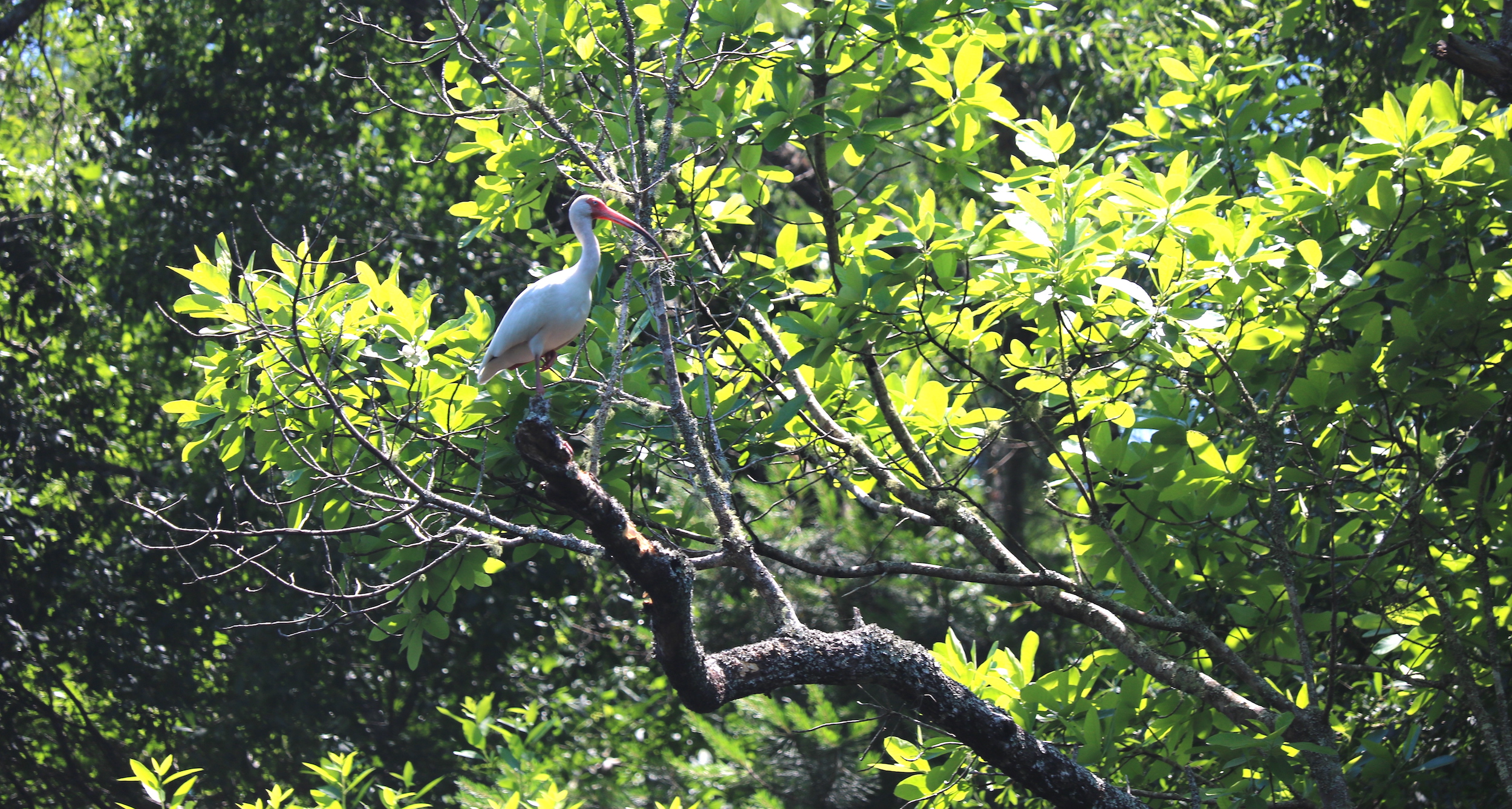
Photo by Samarra Mullis

Eudocimus albus
White ibis

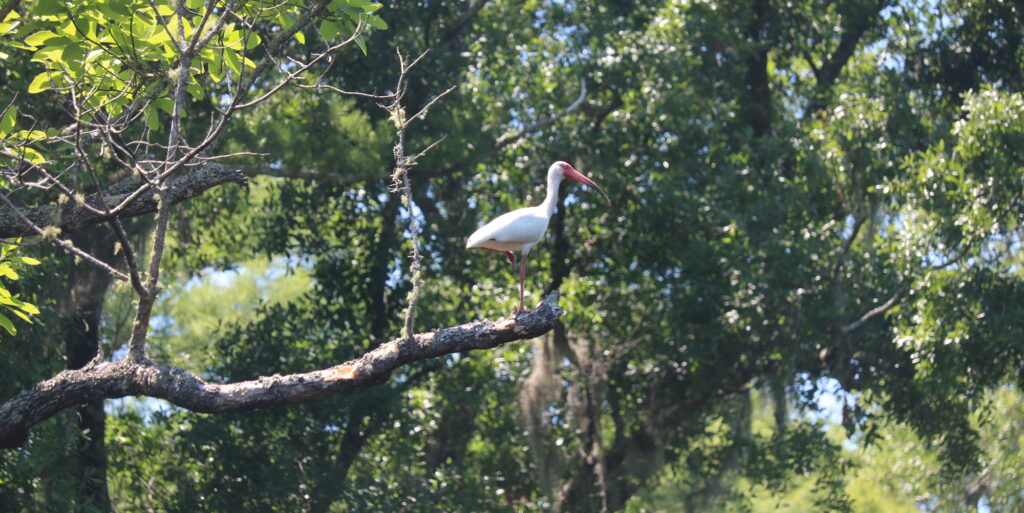
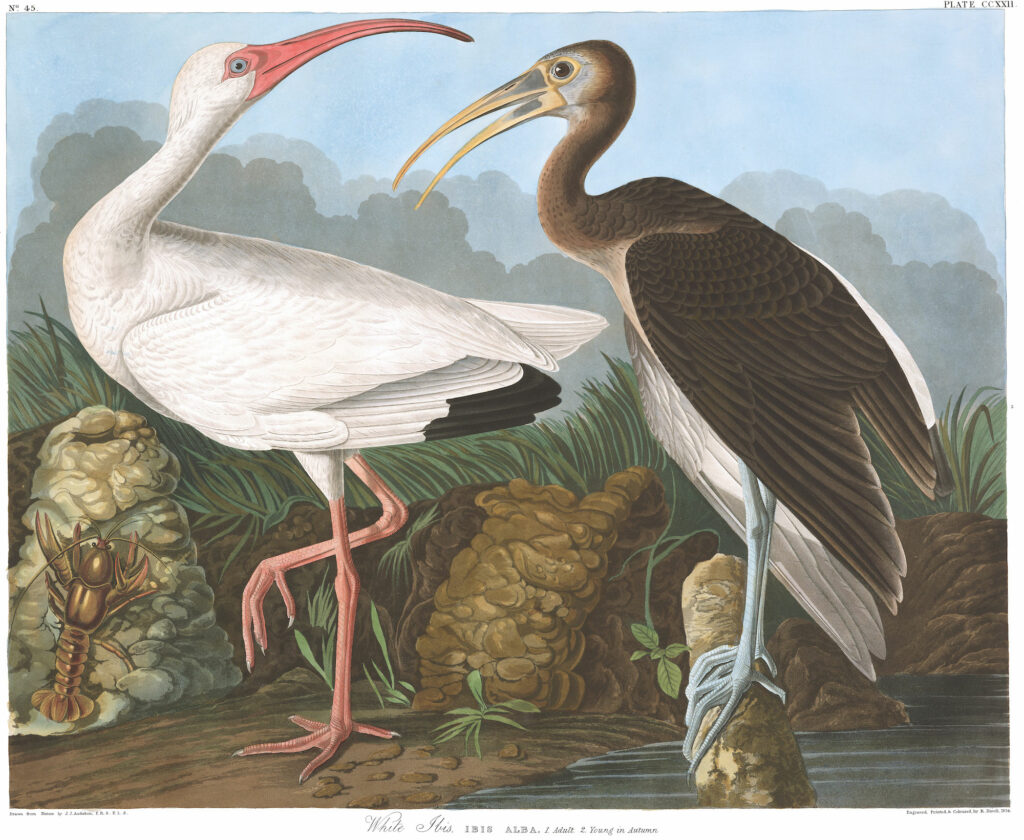
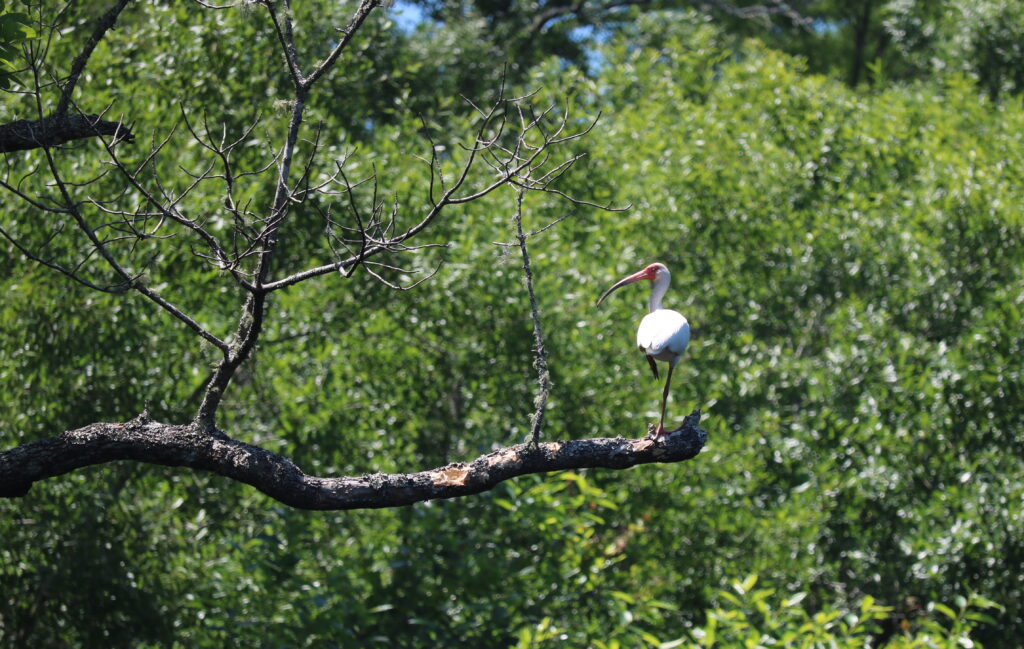
The white ibis is a wading bird that lives in coastal areas, marshes, wetlands, riverbanks, and swamps. With long pink legs, it stands about 2 feet tall. Its plumage is nearly entirely white, with a small bit of black on the tips of its wings. The black wing tips are generally only visible when the ibis is in flight. 

White ibis feed by dragging their long bill in shallow waters and mudflats. Their diet is a variety of small crustaceans, fish, frogs, insects, and other small creatures. In the 1830s, John James Audubon noted some people hunting and eating white ibis. The flavor was reportedly fishy.

White Ibis by John James Audubon

White ibis live in large colonies, usually building their nests in trees. They typically lay 2-4 eggs and the parents take turns staying with their young. As their habitat has changed, particularly in their Floridian breeding locations, white ibis are likely to be seen in neighborhood canals and golf course water features.

Photo by Samarra Mullis

They are also common in the lower part of the Ogeechee and Canoochee Rivers. Though they may be seen in coastal areas, they feed and live in freshwater habitats. Native American folklore assigned it to be the symbol of danger and hope, as it is said to be the last animal to take refuge before a hurricane, and the first to emerge after a storm. 

RELEASE: Ogeechee Riverkeeper, City of Savannah Vernon River Restoration Project

FOR IMMEDIATE RELEASE
05/03/21
Contact: Meaghan Walsh Gerard
Communications and Administrative Director
meaghan@ogeecheeriverkeeper.org

OGEECHEE RIVERKEEPER, CITY OF SAVANNAH LEAD VERNON RIVER RESTORATION PROJECT

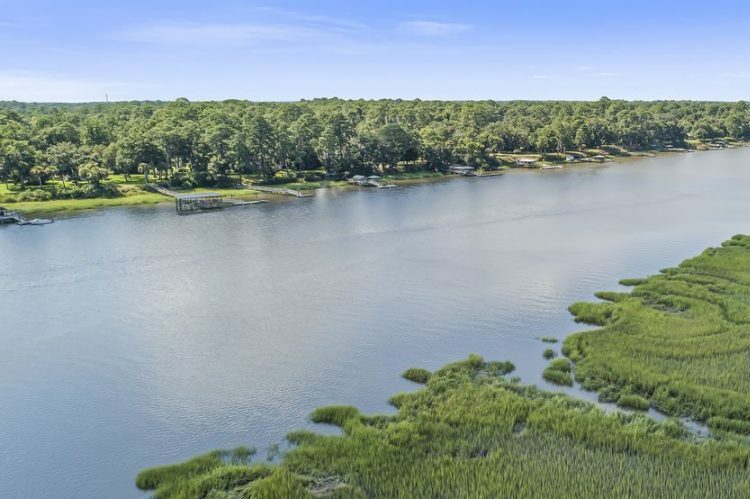
Ogeechee Riverkeeper (ORK) and the City of Savannah are partnering to lead a long term project to protect the water quality and ecology of the Vernon River. The Vernon River receives a significant amount of the stormwater leaving the City of Savannah, via Wilshire Canal, Harmon Canal, Casey Canal, and Hayners Creek, all part of the Ogeechee River watershed. The goal is to improve water quality, restore ecological habitat, and “Protect The Vernon River” from current and future threats.

The canals and tributaries that feed the Vernon River are highly impacted by urban development. When stormwater runs across parking lots, through streets, and off of other impervious surfaces it doesn’t have a chance to be filtered through soils before reaching the marsh. This, along with aging sewage infrastructure, failing septic systems, and disconnected riparian habitats, has negatively impacted the canals and creeks of the Vernon watershed.

In 2001 a group of citizens came together to focus on protecting the Vernon River from urban pollution when it was listed as ‘impaired’ by the Georgia Environmental Protection Division (GA EPD). This allowed ORK and the City of Savannah to apply for grant funding and conduct further testing to trace causes and share the results. In 2012 the committee expanded to a group of stakeholders to create a Watershed Management Plan (WSMP). The plan was released in 2013 and a number of recommendations have been enacted. 

This year, Ogeechee Riverkeeper, the City of Savannah, and other stakeholders are updating the WSMP with new data and recommendations with the goals to: restore the waterways in the Vernon River basin to the point that it can be delisted as an impaired waterbody by GA EPD; and to reduce the amount of litter and plastic pollution entering the waterways.

“All of Savannah’s stormwater infrastructure flows into a public waterway,” says Laura Walker, Water Resources Environmental Manager for the City of Savannah. “These waterways are lifelines to Savannah’s environmental and economic health. We work hard every day to try and keep them fishable and swimmable. But we need everyone to treat the storm system with care. We need everyone to protect the storm drains, ditches, and creeks and keep them clean.” 

The steering committee includes representatives from:

  • The City of Savannah
  • Cuddybum Hydrology
  • Ogeechee Riverkeeper
  • Savannah State University
  • Skidaway Institute of Oceanography (UGA)
  • Town of Vernonburg
  • Concerned residents from neighborhoods throughout the watershed

“With its gorgeous views and vibrant wildlife, the Vernon River exemplifies why our coastal rivers are such jewels and worthy of our protection,” says Damon Mullis, Ogeechee Riverkeeper and Executive Director. “We are so grateful for the broad group of stakeholders working with us to minimize the threats that urban runoff, and litter and plastic pollution pose to this special waterbody. Local residents are encouraged to volunteer for litter cleanups, citizen science programs, educational events, and more in the coming months.”

Sign up to volunteer, view data, and read the 2013 WSMP at: https://www.ogeecheeriverkeeper.org/vernon

About Ogeechee Riverkeeper: Ogeechee Riverkeeper 501(c)(3) works to protect, preserve, and improve the water quality of the Ogeechee River basin, which includes all of the streams flowing out to Ossabaw Sound and St. Catherine’s Sound. At 402 miles long, the Ogeechee-Canoochee River system drains more than 5,500 square miles of land across 22 Georgia counties. ogeecheeriverkeeper.org

RELEASE: Ogeechee Riverkeeper partners with Green Truck Pub for Earth Day

FOR IMMEDIATE RELEASE
03/15/21

Ogeechee Riverkeeper
Contact: Meaghan Gerard
Communications and Administrative Director
meaghan@ogeecheeriverkeeper.org

Green Truck Pub
Contact: Whitney Shephard Yates, Co-owner
912-234-5885
greentruckevents@gmail.com

OGEECHEE RIVERKEEPER PARTNERS WITH GREEN TRUCK PUB FOR EARTH DAY
Event will showcase a new interactive map and burger special

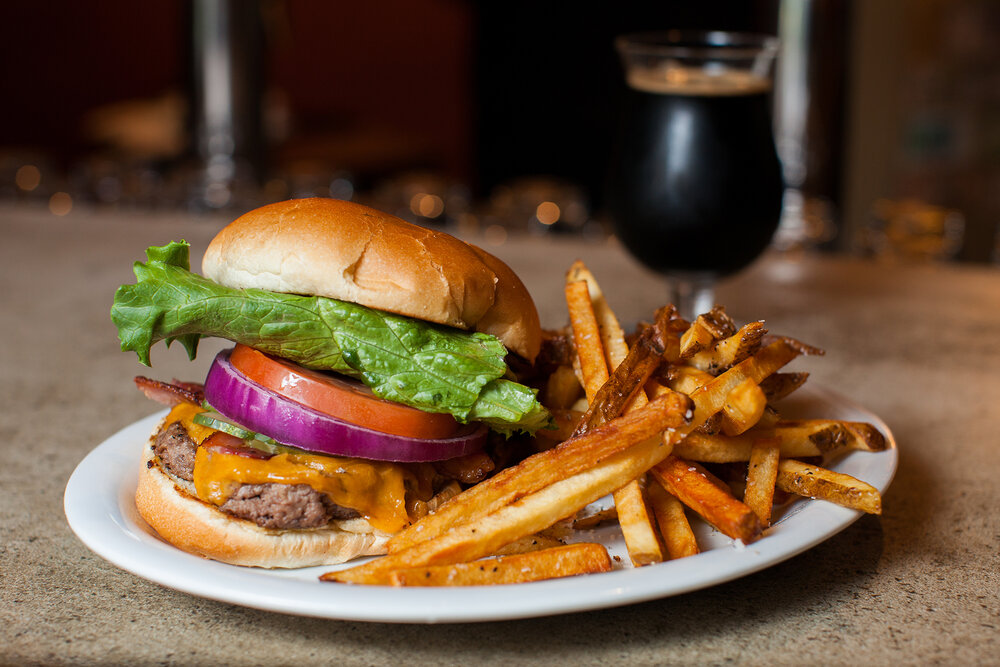
Ogeechee Riverkeeper (ORK) is partnering with Green Truck Pub (GTP) on Thursday, April 22, 2021, in the parking lot of GTP, 2430 Habersham St. The event will be held from 5-9 p.m. and feature a live outdoor projection of a new interactive map of the Ogeechee River basin. GTP will offer a new burger special highlighting the celebration. 

Members of ORK staff will be on-hand to answer questions, assist with memberships, and demonstrate the new StoryMap. Using ArcGIS technology, the web-based platform integrates data, narrative, maps, and graphics to tell the story of the Ogeechee River basin and the Riverkeeper organization. The result is an interactive experience for the user. 

“We are in awe of the commitment of Ogeechee Riverkeeper to protect our shared river basin. Most of Chatham County thinks of the Savannah River, but in reality 76% of the county is in the Ogeechee watershed. Whether you’re paddling, drinking clean water, or appreciating the deep heritage, the river is a tremendous resource to our community and upstream communities alike. Green Truck has enjoyed a long partnership with ORK, and the StoryMap viewing is a fun way to showcase all of the good that ORK is doing.” 

ORK and GTP are committed to maintaining the highest COVID-19 safety protocols. This is an outdoor, ‘drop by’ event only. Guests are encouraged to visit the ORK tent while picking up a to-go order from GTP.  

The event is part of Earth Day Savannah Month (earthdaysavannah.org) and guests are encouraged to view their master calendar for other virtual or small outdoor events during the month of April. 

About Ogeechee Riverkeeper: Ogeechee Riverkeeper 501(c)(3) works to protect, preserve, and improve the water quality of the Ogeechee River basin, which includes all of the streams flowing out to Ossabaw Sound and St. Catherine’s Sound. At 245 miles long, the Ogeechee River system drains more than 5,000 square miles of land across 22 Georgia counties. More at ogeecheeriverkeeper.org.

About Green Truck Pub: Locally-owned, Green Truck Pub features coastal Georgia farmers and American craft brewers. We do simple food the hard way, from scratch, with love, every day. We are proud to be Savannah’s grass-fed burger joint, ten years and counting. www.greentruckpub.com.